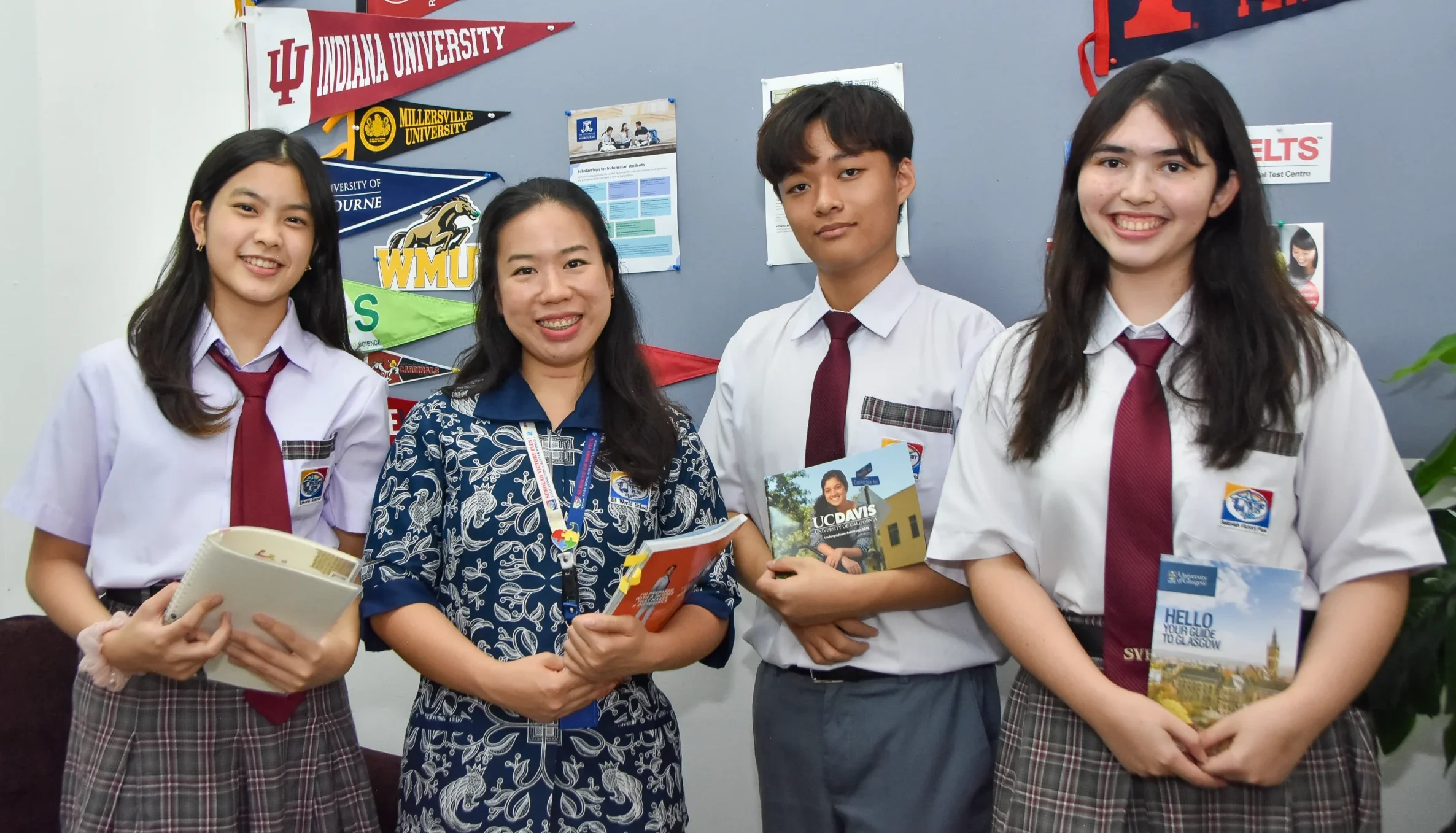
When choosing a school, most parents share the same question:
“Will this education help my child get into a great university?”
The same question often comes up when discussing the International Baccalaureate (IB). With its strong global reputation, many parents wonder: Does earning an IB diploma increase my child’s chances of being accepted into their dream university?
The truth is that every university has its own admissions process, academic standards, and selection criteria. However, one quality universities around the world consistently look for is students who are ready to learn, grow, and make meaningful contributions.
And that is where the value of the IB Continuum becomes especially meaningful.
Universities Look for More Than Just Good Grades
In today’s rapidly changing world, universities are looking beyond academic achievement. According to research, the competencies most closely associated with success in higher education include critical thinking, self-directed learning, time management, collaboration, and other higher-order thinking skills.
In other words, universities aren’t only asking, “How smart is this student?”
They also want to know, “Is this student prepared for university life and the challenges that lie ahead?”
So, What Is the Value of Completing the IB Continuum and Earning an IB Diploma?
An IB diploma is much more than proof of graduation. It represents a learning journey that gradually equips students with the knowledge, skills, and mindset they need to thrive, not only at university, but throughout their lives.
More importantly, each stage of the IB Continuum builds upon the one before it. The continuity of learning allows students to develop their abilities progressively, creating a strong foundation that prepares them for the increasing academic challenges of the next programme.
Building Critical Thinkers and Independent Learners: Primary Years Programme (PYP)
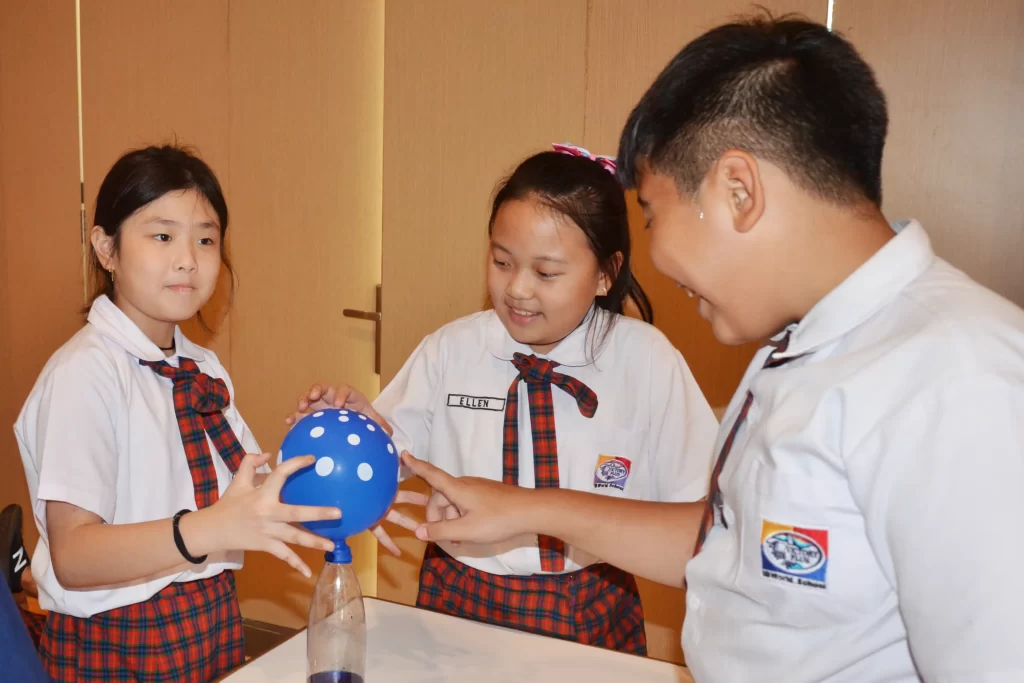
The journey begins in the Primary Years Programme (PYP), where students are encouraged to ask questions, explore ideas, and connect their learning to the real world through Units of Inquiry (UOI).
From an early age, they learn how to conduct simple research, collaborate with classmates, communicate their ideas clearly, and reflect on their own learning.
Through Learning Celebrations and the PYP Exhibition, students also begin developing presentation skills, teamwork, project management, and the confidence to share their learning with a wider audience.
These experiences help children understand that learning is about much more than memorizing information, it’s about discovering meaning, making connections, and sharing their understanding with others.
These early experiences also lay the groundwork for the learning they will encounter in the Middle Years Programme (MYP).
Middle Years Programme (MYP): Developing Independence and Conceptual Thinking
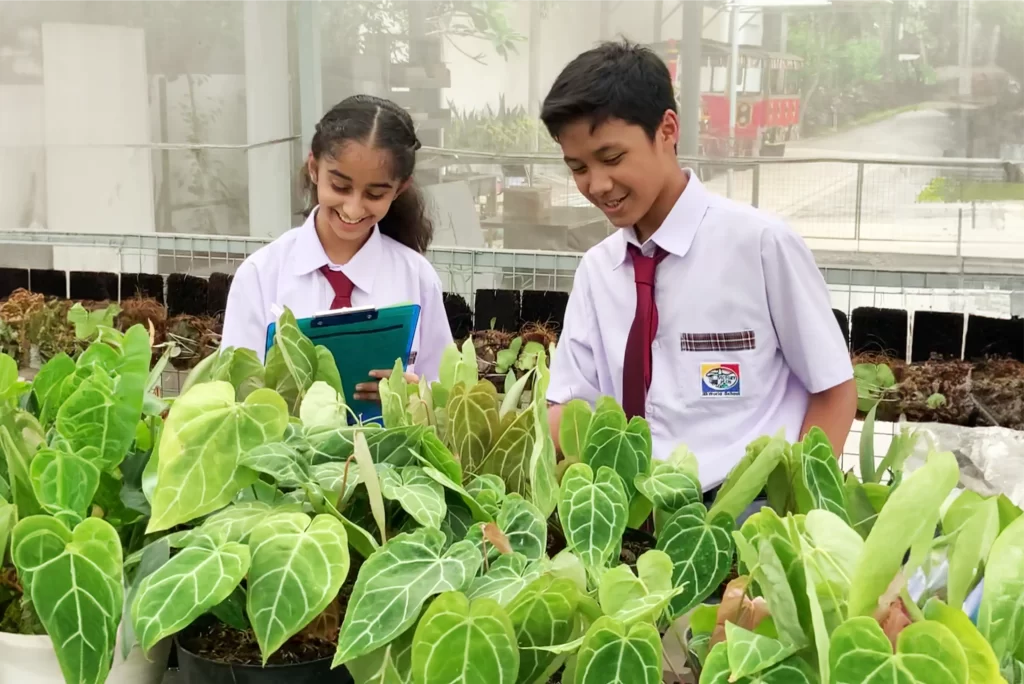
As students move into the Middle Years Programme (MYP), they take greater ownership of their learning.
Through concept-based learning connected to real-world contexts, students learn to examine issues from multiple perspectives, make connections across different subjects, and strengthen their critical thinking and problem-solving skills.
Projects, presentations, reflections, and collaborative learning experiences throughout MYP also help students develop communication skills, time management, teamwork, and independent learning habits.
These are not isolated experiences. They are intentionally designed to prepare students for the greater academic rigor and independence they will encounter in the Diploma Programme (DP). Students who continue through the IB Continuum often enter DP already familiar with the approaches to learning, inquiry, and reflection that are central to IB education.
Diploma Programme (DP): Bringing Years of Learning Together
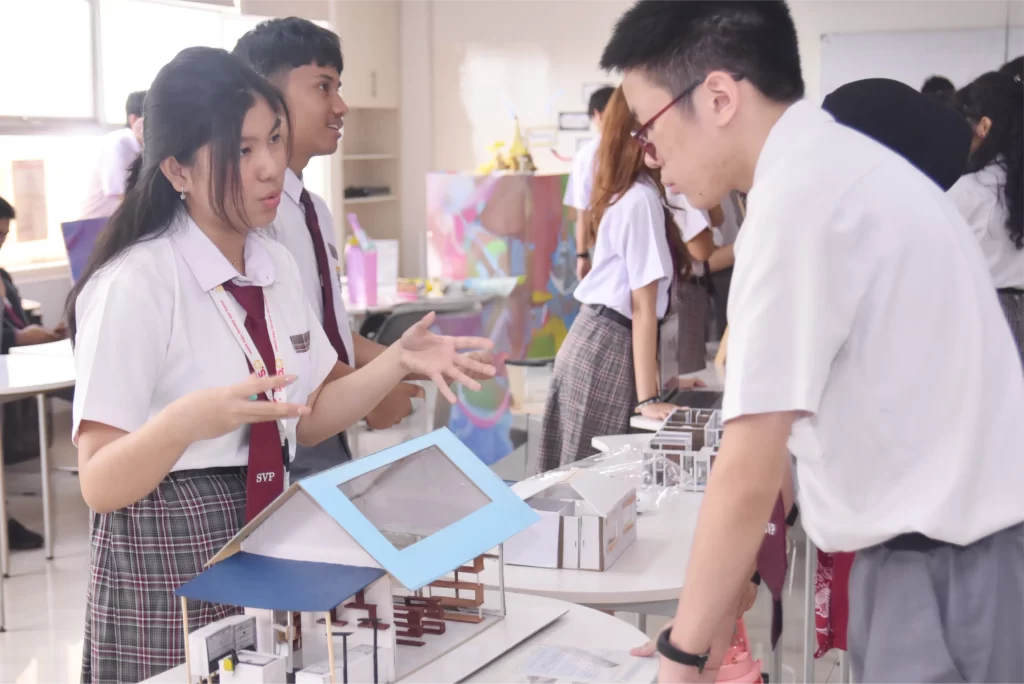
By the time students enter the Diploma Programme (DP), they are ready to build on the skills and habits they have developed throughout the PYP and MYP. Rather than starting from scratch, they continue strengthening their ability to think independently, ask meaningful questions, manage complex responsibilities, and connect learning across different subjects.
At the heart of the DP are three core components: Theory of Knowledge (TOK), the Extended Essay (EE), and Creativity, Activity, Service (CAS). Together, these experiences challenge students academically while helping them grow into confident, well-rounded individuals who are prepared for university and beyond.
Theory of Knowledge (TOK): Learning to Think Critically
Theory of Knowledge encourages students to question how knowledge is created, evaluate evidence, and consider different perspectives. These critical thinking skills prepare them for the discussions, analysis, and independent thinking expected at university.Extended Essay (EE): Learning Through Independent Research
The Extended Essay gives students the opportunity to conduct an independent research project on a topic they are passionate about. Along the way, they develop valuable university-level skills, including academic research, source evaluation, and evidence-based writing.
When students later face research assignments at university, these processes are already familiar, allowing them to approach new academic challenges with greater confidence.Creativity, Activity, Service (CAS): Growing Beyond the Classroom
Through Creativity, Activity, Service, students engage in creative projects, physical activities, and community service. These experiences foster leadership, collaboration, empathy, and resilience, qualities that contribute not only to university success but also to lifelong personal growth.
So, What Is the Advantage of an IB Background?
Many parents ask:
“Does an IB diploma guarantee my child admission to their dream university?”
Perhaps a more meaningful question is:
“Will my child develop the skills, mindset, and character needed to succeed when that university opportunity comes?”
Ultimately, university is not the finish line. It is simply one milestone in a much longer journey.
That is the true value of the IB Continuum. Its greatest strength is not the certificate students receive at the end of the programme, but the continuous learning journey that shapes them into confident, curious, independent learners who think critically, collaborate effectively, and are prepared to embrace future opportunities and challenges.
For families who begin their IB journey early and continue through each stage of the Continuum, every programme builds naturally on the last. Rather than starting over at each level, students deepen the skills, habits, and confidence they have been developing year after year, making each transition smoother and each new challenge more manageable.
Because the best education doesn’t simply help children gain admission to their dream university, it prepares them to flourish long after they arrive there.