As Artificial Intelligence continues to reshape the landscape of education, a new truth is emerging: the more we interact with high-tech algorithms, the more we need green spaces.
For our students, the school’s outdoor environments are no longer just places to burn off energy, they are becoming essential training grounds for the one skill AI cannot replicate: original human creativity.
Beyond the Pixel: The Sensory Gap
AI excels at delivering information, simulating scenarios, and helping students solve problems quickly. However, unlike the experience of using a tablet, the outdoors offers tactile, olfactory, and auditory stimuli that keep the human nervous system engaged and curious.
Recent research published in Archnet-IJAR (2025) suggests that the practice of integrating natural elements into learning environments is a direct antidote to the “algorithmic thinking” induced by digital tools. The study found that students in these nature-integrated spaces showed a significant, measurable increase in divergent thinking: the ability to generate unique, “outside-the-box” solutions to open-ended problems.
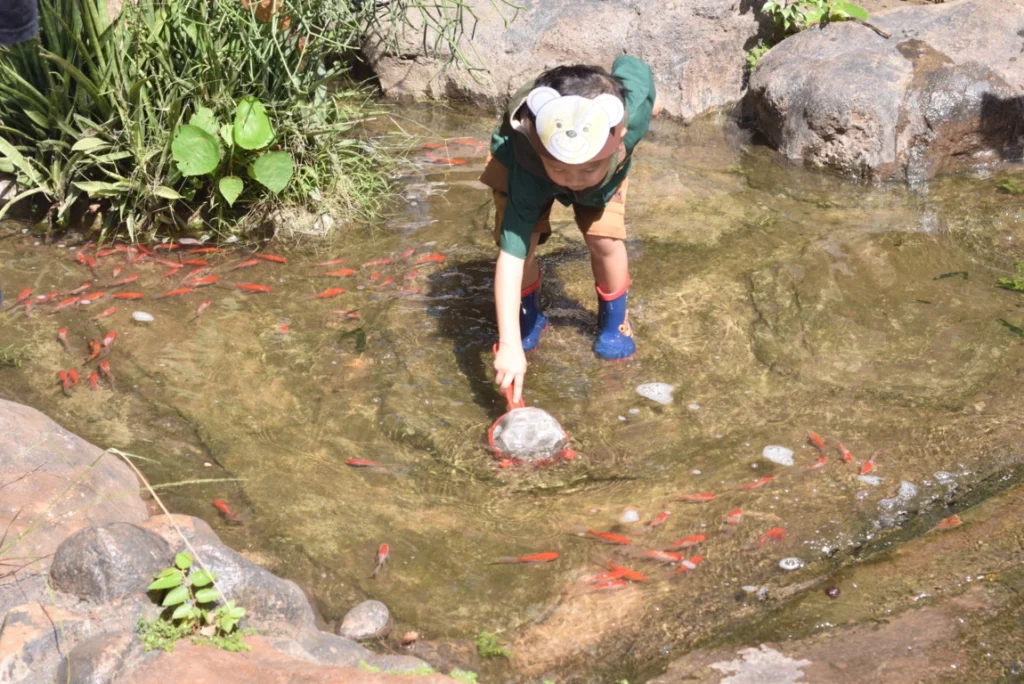
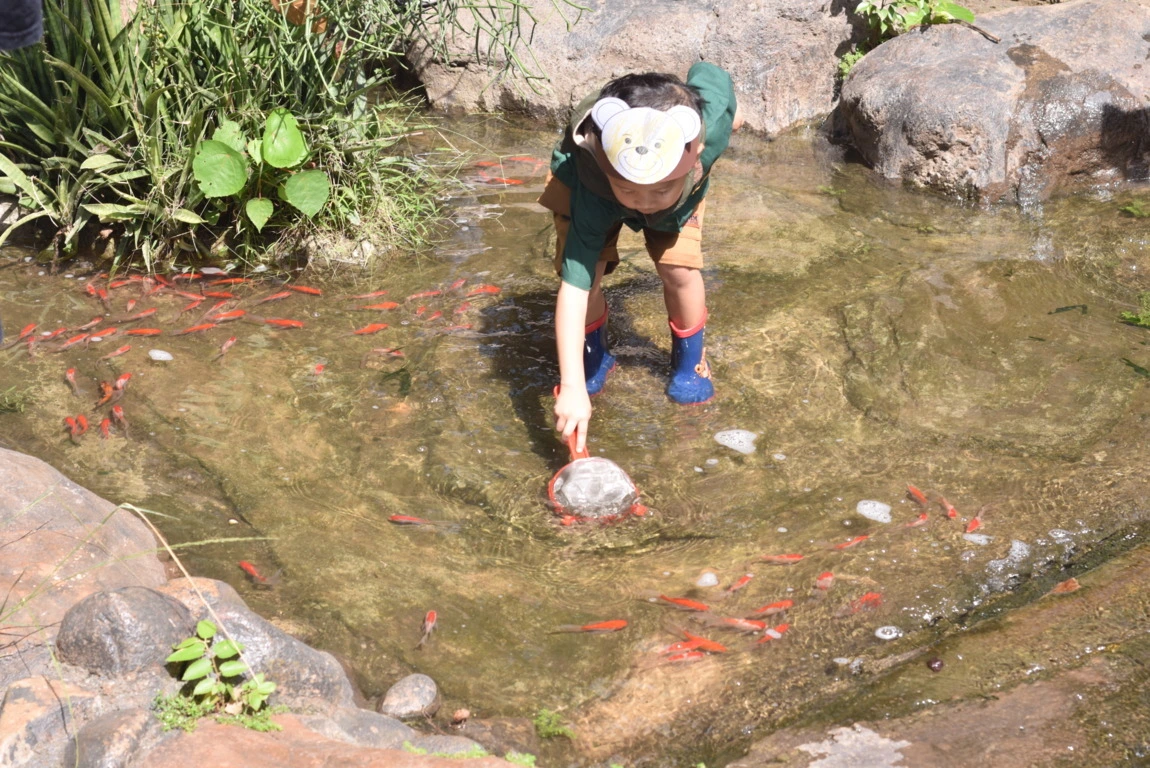
When students observe a growing plant, explore a forest, or watch the flow of a river, they are not just learning facts, they are experiencing systems, patterns, and relationships firsthand. These experiences make learning more memorable and meaningful, helping students connect digital knowledge to the physical world around them.
Nature as a Live Model of Adaptive Learning
While AI systems are moving toward continuous learning, nature has already mastered this through billions of years of evolution. By stepping into the natural world, students:
- Understand change as a constant, viewing it as a natural progression rather than a failure.
- Learn resilience through observing natural cycles of growth, decay, and renewal.
- Develop a mindset aligned with lifelong learning and adaptation.
The Power of Combining AI and Nature
The future of education is not about choosing between technology and nature, it is about integrating both.
AI can provide insights, simulations, and personalized support, while nature grounds that learning in real-world experience. For example, students might study plant biology outdoors and then use AI tools to analyze growth patterns. They might explore local ecosystems and then use digital tools to model the impact of climate change.
By balancing the power of AI with the power of nature, we ensure our students graduate not just as tech-literate workers, but as inspired, creative thinkers ready for a complex future.